Book Review: The Phoenix of Florence by Philip Kazan
I often feel like there's three genres of historical books. If it's for men, it's a war story; if it's for women, it's a romance. If it's for everyone, it's a murder mystery. The Phoenix of Florence starts off as a murder mystery. Onorio Celavini investigates the brutal murder of a serial seducer and his latest mistress in Renaissance Florence, but soon the investigation starts to feel personal. About a third of the way through, there is a massive revelation about the character - so massive I wonder if it should have been revealed on the back of the book, because it's what the entire rest of the book is about. The middle third gives us Onorio's backstory, and the final third wraps it all together. It's also at this point that the genre changes: ultimately, this is an action novel with a fairly straightforward revenge plot.
I can't help but feel that this book is inspired by A Song of Ice and Fire. Its main character seems highly inspired by one of Martin's, and its major theme is the violence that gets done against women, and their powerlessness in society, which made it a fairly unpleasant read in places. That said, I found Celavini an enthralling character. The prose was very well written, and the reveal caught me genuinely by surprise - so much so that I had to stop and reread the page several times. Florence is brought alive too - the stifling heat, the smells, the rampant corruption and vice. I'm interested to see what else Philip Kazan has written about the Renaissance.
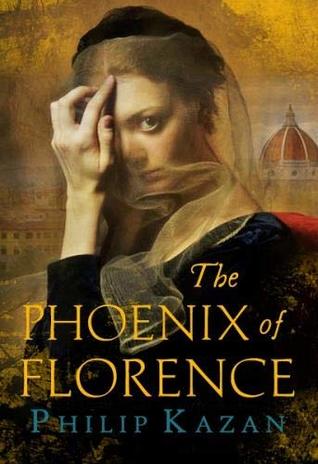
I can't help but feel that this book is inspired by A Song of Ice and Fire. Its main character seems highly inspired by one of Martin's, and its major theme is the violence that gets done against women, and their powerlessness in society, which made it a fairly unpleasant read in places. That said, I found Celavini an enthralling character. The prose was very well written, and the reveal caught me genuinely by surprise - so much so that I had to stop and reread the page several times. Florence is brought alive too - the stifling heat, the smells, the rampant corruption and vice. I'm interested to see what else Philip Kazan has written about the Renaissance.


Comments
Post a Comment